
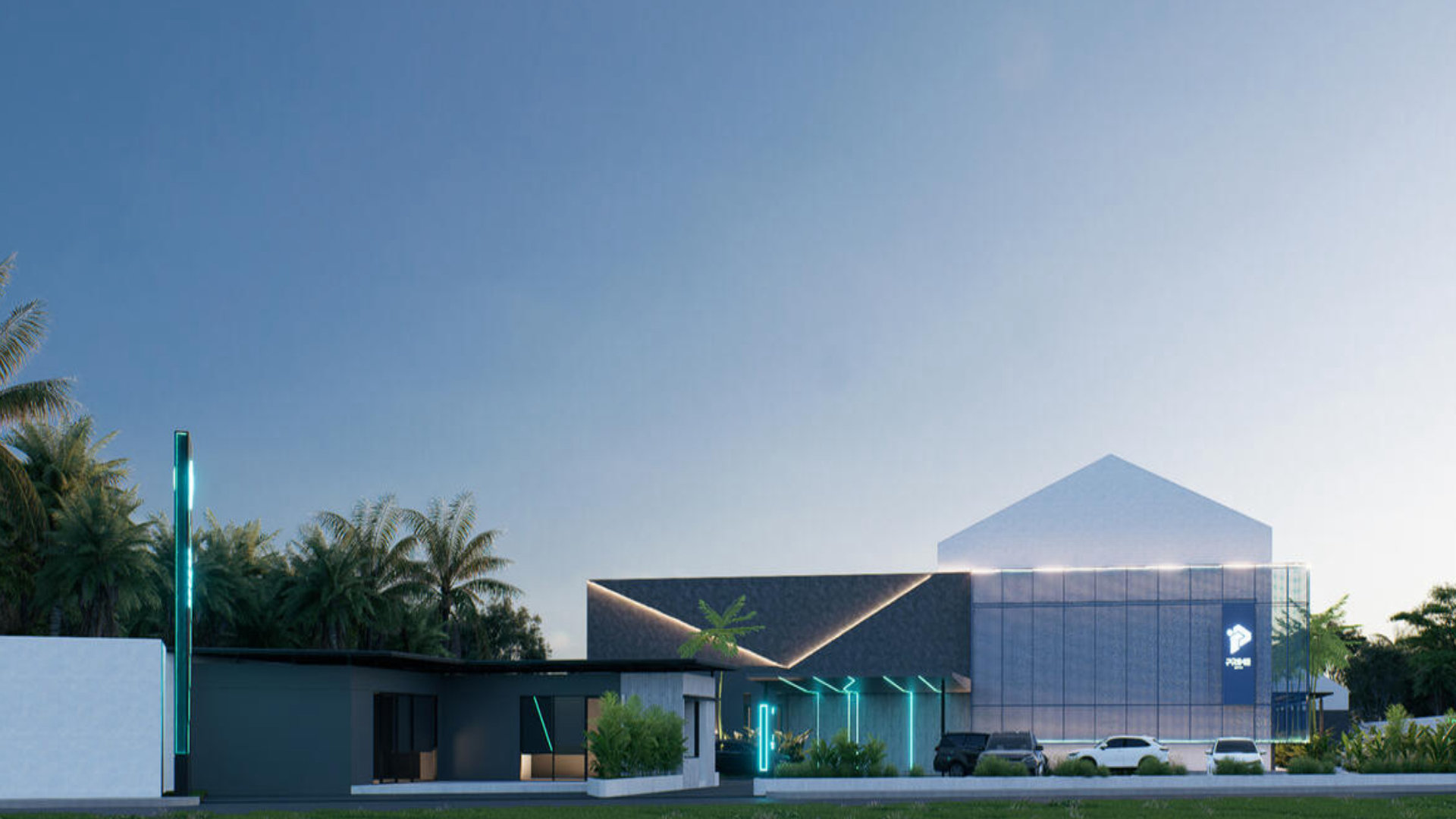
When we walked into the building that would become Prime Gym Surabaya, it had been sitting empty for nearly a decade. Concrete columns the width of a small car. Steel trusses that had rusted exactly enough to be beautiful. A roof that leaked in three places.
The client's first question was reasonable: "Should we just tear it down?" Our answer was the start of this article.
The cost of starting over.
Demolition is rarely the cheaper option once you account for the things people forget: hauling rubble through narrow Surabaya streets, dealing with sub-surface foundations, the carbon cost of new concrete, and — most importantly — the months you lose waiting for permits on a "new build" versus an interior renovation.
We ran the numbers and the answer was unambiguous: preserve the shell, rebuild the inside. What you save on demolition and structural work, you reinvest into the things that actually shape experience — lighting, acoustic treatment, finishes, and a sleek equipment layout.
"You don't restore an old building to make it look new. You restore it so its age becomes a feature, not a bug."
— Polaar studio note, March 2025What we kept, and why.
Three things we refused to touch:
- Raw concrete columns and beams — patina, hairline cracks, and all. They tell the story of the building's first life.
- The original steel trusses overhead — sandblasted, sealed, then left visible. Nothing modern matches the geometry of welded steel from the 80s.
- The two-storey volume — most renovators would drop a ceiling. We doubled-down on it instead, using the height for cardio decks and overhead rigging.
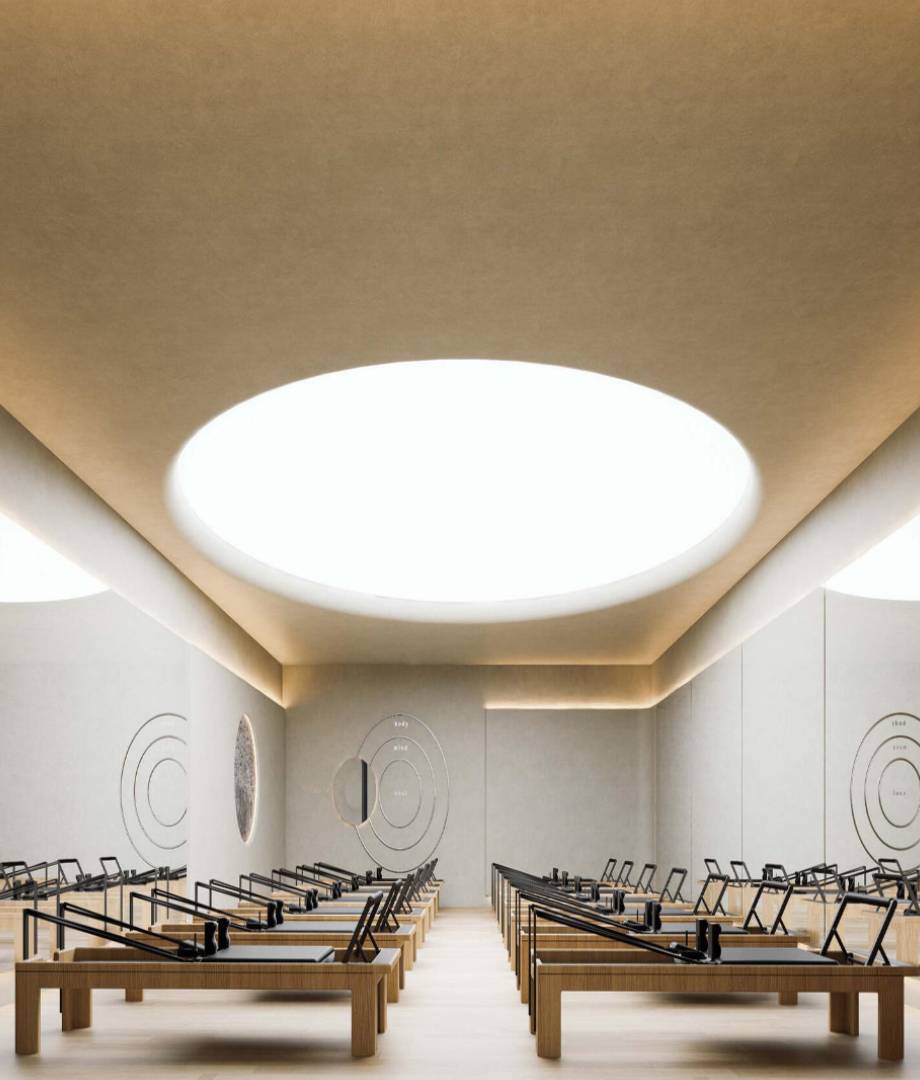
What we added, and why.
The trick with adaptive reuse is knowing what to add. Get it wrong and the new pieces fight the old. Get it right and they complete each other.
Warm timber, in restraint.
We brought in warm timber on three surfaces — the rigging soffit, a wall-mounted equipment rack, and a single accent column wrap. Used sparingly, it softens the industrial palette without making the space feel "domestic." Used too much, and the warehouse character disappears.
Lighting that does work.
Three layers. Ambient (warm 2700K from the trusses, low intensity), task (cool 4000K, spotlit at the equipment stations), and accent (RGB strips behind the mirror walls, dimmable per zone). At any time of day, the room reads differently.
Acoustic ceiling pockets.
Big industrial spaces are echo chambers. We recessed acoustic panels into the timber ceiling between trusses — invisible from the floor, but they cut reverb by roughly half.
The result.
Prime Gym opened in February 2026. It feels both powerful and welcoming — a flagship that looks like it was always supposed to be a gym, in a building that was always supposed to be a warehouse. Both are true. That's the trick.
If you're sitting on an underused industrial property in Indonesia, ping us. We'd love to talk about what's possible without tearing it down.